
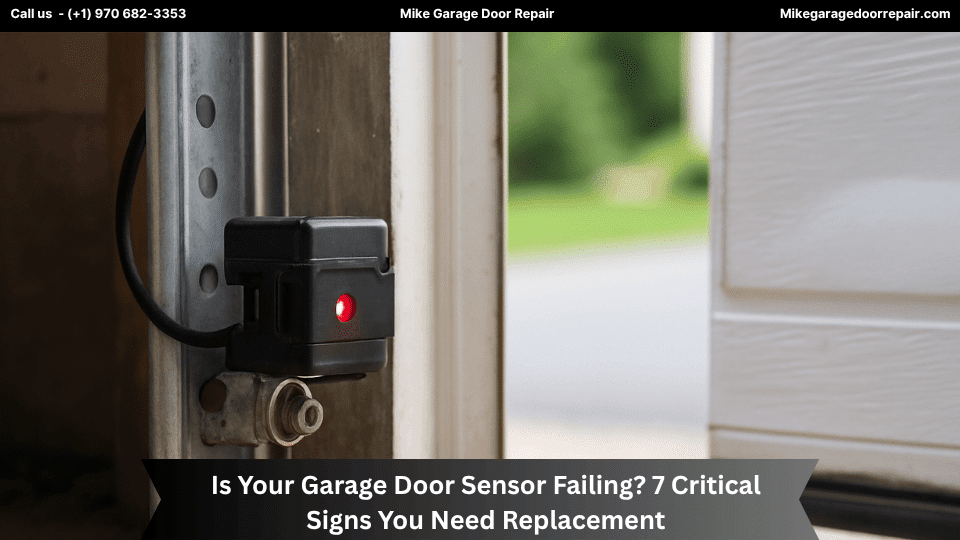
Is Your Garage Door Sensor Failing? 7 Critical Signs You Need Replacement
Since 1993, U.S. federal law has required automatic garage doors to include safety sensors that prevent entrapment and accidents. These infrared “photo-eye” sensors are your first line of defense against a 300-pound door closing on a person, pet, or object. When they malfunction, your family’s safety is at risk. Over 30,000 garage door-related injuries occur annually in the U.S.—many preventable with functional sensors. Here’s how to diagnose problems and know when replacement is essential.
How Garage Door Sensors Work
Garage door safety sensors operate via an invisible infrared beam transmitted between two units mounted 2-6 inches above the floor on opposite sides of the door. One unit sends the beam; the other receives it. If anything interrupts this beam while the door is closing, the system automatically reverses the door’s movement. Proper function requires:
- Unobstructed alignment between both units
- Clean lenses free of dust, debris, or moisture
- Intact wiring connecting to the opener
7 Signs Your Garage Door Sensors Need Replacement
:warning: 1. Erratic Door Behavior
- Door closes partially then reverses for no apparent reason
- Door refuses to close unless you hold the wall button (which overrides sensors)
- Door stops mid-cycle or opens randomly during operation
This indicates inconsistent beam transmission due to internal sensor failure.
:bulb: 2. Blinking or Dark Sensor Lights
Check the LED lights on each sensor:
- Solid green/yellow: Sensors aligned and functional
- Blinking light: Misalignment or wiring fault
- No light: Power failure, broken wiring, or dead sensor
:hammer_and_wrench: 3. Failed Troubleshooting
If basic fixes don’t resolve issues, replacement is likely:
- Cleaning lenses with a microfiber cloth
- Realigning sensors until LEDs glow steadily
- Clearing obstructions like cobwebs or tools
:sunny: 4. Sunlight or Weather Interference
Sensors exposed to direct sunlight (especially at dawn/dusk) may malfunction due to infrared interference. Moisture from humidity or floods can also corrode internal circuits. If shielding sensors or drying components fails, replace them.
:electric_plug: 5. Wiring Damage or Voltage Issues
Inspect wires for:
- Fraying, corrosion, or chew marks from pests
- Loose connections at sensor terminals or opener
Use a multimeter to test voltage. A reading below 4-5V DC at the opener terminals indicates electrical failure.
:camera: 6. Physical Sensor Damage
Cracked lenses, bent brackets, or water-fogged casings compromise functionality. Physical damage usually requires replacement, not repair 69.
:alarm_clock: 7. Age-Related Failure
Most sensors last 5–10 years. If yours are older or show frequent issues despite repairs, proactive replacement ensures reliability.
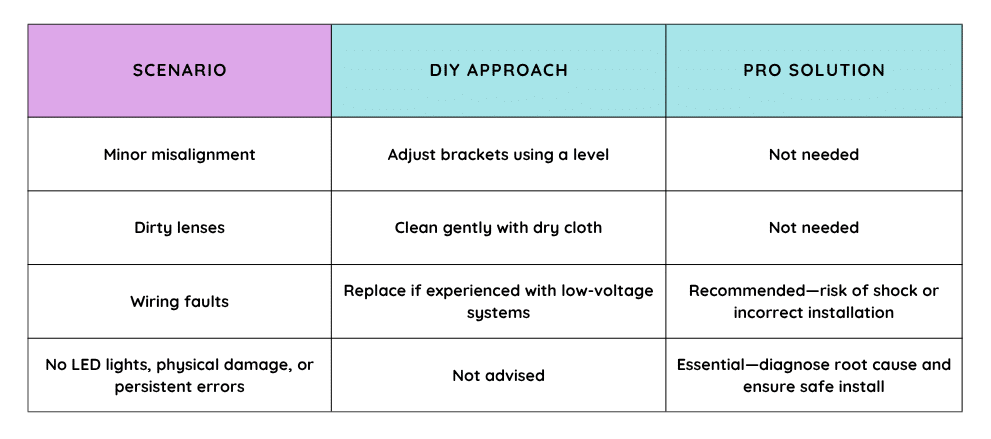
DIY vs. Professional Replacement
⚠️ Warning: Never disable sensors to “fix” operational issues. This violates federal safety standards and creates entrapment hazards.
Choosing Replacement Sensors
Opt for 2025 top-rated brands compatible with your opener:
- LiftMaster/Chamberlain: Reliability + smart features
- Genie: Humidity resistance
- Ryobi: Wi-Fi alerts and app integration
Ensure new sensors are UL 325-compliant and installed with surge protectors in storm-prone areas.
Prevent Future Sensor Problems
- Monthly: Clean lenses and check alignment
- Seasonally: Test auto-reverse function by placing a roll of tape in the door’s path
- Annually: Schedule professional maintenance to inspect sensors, springs, and tracks
When to Call a Professional
Seek expert help if:
- Troubleshooting fails to restore function
- Wiring is damaged or voltage readings are abnormal
- Your door closes on test objects
- Sensors are >5 years old and acting inconsistently
Safety First: Garage door springs and electrical components pose severe injury risks. Professionals have tools and training for safe repairs.
Call to Action
Don’t gamble with faulty sensors—a malfunctioning garage door is a 300-pound hazard. If you’ve spotted warning signs or failed DIY fixes, schedule a sensor safety inspection today. Our certified technicians provide same-day replacements using durable, weather-resistant components. Contact us now for a free quote and ensure your garage door meets 2025 safety standards!


