

Electric Garage Door Malfunctions: Expert Diagnostic Guide
When your motorized garage door fails, it’s not just inconvenient—it can compromise home security and safety. Before calling for service, use this professional-level troubleshooting manual to identify and potentially resolve common electrical and mechanical failures.
This guide will walk you through quick fixes for the most frequent electric garage door problems, saving you time and money.
Section 1: Comprehensive Failure Analysis
Complete Operational Failure (No Response)
Diagnostic Steps:
- Power Verification Protocol
- Confirm wall outlet functionality with lamp test
- Check for tripped GFCI outlets in circuit
- Inspect service panel for tripped breakers (15-20 amp circuits)
- Emergency Release Examination
- Verify manual release cord hasn’t been engaged
- Test door balance (should stay open 3-4 feet when manually lifted)
- Remote Control Diagnostics
- Conduct button continuity test with multimeter
- Check for corroded battery contacts
- Test secondary remotes to isolate handset failure
Section 2: Intermittent Operational Issues
Door Reversal Syndrome
Technical Causes:
- Photoelectric sensor misalignment (>1/8″ variance)
- Excessive track friction (measured with spring scale)
- Decaying torsion spring torque (10%+ performance drop)
Precision Solutions:
- Use laser alignment tool for sensor calibration
- Measure roller resistance with digital force gauge
- Calculate spring life expectancy based on cycle count
Erratic Movement Patterns
Mechanical Culprits:
- Worn sprocket assembly (check for 3mm+ gear tooth wear)
- Failing logic board capacitors (bulging tops indicate failure)
- Binding track sections (measure with straightedge)
Section 3: Advanced Electrical Diagnostics
Circuit Board Analysis:
- Test transformer output (should be 24V AC ±10%)
- Check capacitor microfarad rating (typically 5-10% tolerance)
- Inspect for cold solder joints on main PCB
Motor Performance Testing:
- Measure amp draw during operation (compare to nameplate)
- Check for armature short circuits (0.5-3 ohms typical)
- Verify thermal overload reset function
Section 4: Specialized Repair Techniques
Lubrication Engineering
- Use synthetic grease with NLGI #2 rating for gears
- Apply silicone-based lubricant (ISO VG 10-22) to bearings
- Avoid petroleum products that attract dust
Precision Alignment Procedures
- Track parallelism tolerance: 1/16″ per vertical foot
- Vertical track plumb requirement: ≤1/8″ over 8 feet
- Horizontal track slope: 1/4″ decline toward back
Section 5: Predictive Maintenance Schedule
Critical Service Intervals:
- Every 3 months: Mechanical system inspection
- Biannually: Electrical component testing
- Annually: Professional load analysis
Replacement Timelines:
- Torsion springs: 10,000 cycles
- Roller bearings: 25,000 cycles
- Logic boards: 7-10 years
Section 6: Safety-Critical Warning Signs
Immediate Service Required When:
- Circuit boards show carbon tracking
- Gears exhibit powdered metal debris
- Door falls faster than 12 inches/second
- Motor emits ozone smell (indicates brush failure)
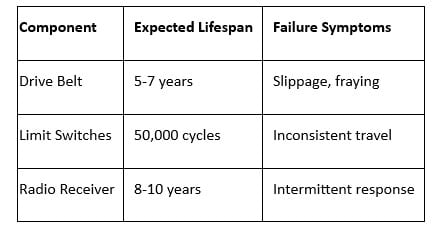
Section 7: Technical Reference Tables
Section 8: Professional vs DIY Decision Matrix
Consider professional service when:
- Electrical measurements exceed norms
- Specialized tools required (torque wrenches, amp clamps)
- Structural modifications needed
- Warranty preservation is essential
Section 9: Manufacturer-Specific Considerations
Brand-Specific Quirks:
- Chamberlain: Requires proprietary programming tools
- LiftMaster: Sensitive to voltage fluctuations
- Genie: Unique limit switch calibration
Section 10: Emergency Protocols
When to Disconnect Power:
- Smoking components
- Uncontrolled door movement
- Exposed wiring
- Water intrusion incidents
This technical manual provides advanced diagnostic procedures beyond basic troubleshooting guides. For complex electrical work or structural adjustments, always consult certified garage door technicians. Record all measurements and observations to assist professional service providers.
If troubleshooting doesn’t fix the problem, our licensed technicians will quickly diagnose and repair it.
Located in Fort Collins, Loveland, or Greeley, Colorado? Thinking about upgrading to an electric garage door? Contact Mike Garage Door Repair for expert advice and professional installation tailored to your home.


